How this Civil Rights-era school helped Black women break office barriers
NEW ORLEANS (InvestigateTV) - Just over 60 years ago, the country took a step toward making good on a promise that all Americans are created equal. The passage of the Civil Rights Act in 1964 desegregated schools, workplaces, and public spaces all while creating protections against discrimination.
A year after the signing of the landmark legislation, an adult education center in New Orleans opened its doors to young Black women. Those women would use the skills they learned to integrate major corporate offices across the South.
In mid-May, a group of women who graduated from the former Adult Education Center in New Orleans came back for a reunion.
During the Civil Rights era, the Adult Education Center, located at Exchange Place in the French Quarter, helped prepare Black women to enter the white-collar workforce by teaching them skills such as typewriting and short handwriting.
Raphael Morgan said back then, office jobs for people like her were few and far between because they could not get training.
“I couldn’t type. I didn’t know shorthand. So, every time I went on an interview, they would say, ‘You don’t have any experience. We’re not going to be able to hire you.’ It’s like a door slammed in your face,” Morgan said. ”I have an older mother, and she had witnessed the same thing. So, all she knew was doing domestic work."
Raphael Morgan enrolled at the Adult Education Center in 1970 after high school. She said she could not afford to go to college and believed going to the center would be her best shot for employment.
“I think my mother was more excited because she really felt badly that she couldn’t afford to send me to college at the time, and to this day, I cannot believe the education that I received. I paid $40 for books only, and we had shorthand, typing and job interviewing skills,” Morgan said.
The vocational school opened in 1965, inspired by Father Timothy Gibbons. But the Catholic priest needed educators. And that’s where Alice Geoffray comes in.
“So, when the school was started by a priest, he wanted an expert teacher in that transition from school into offices. My mother had just won an award, a national classroom teacher’s award,” said Jeff Geoffray, co-founder of the 431 Exchange.
Jeff Geoffray is the son of Alice Jeoffray. He said his late mother wasn’t necessarily a civil rights activist. At that time, Alice Geoffray was a seasoned teacher.
“My mother was not involved in the civil rights movement. She was trying to survive. She was trying to be a teacher and feed her children,” said Geoffray.
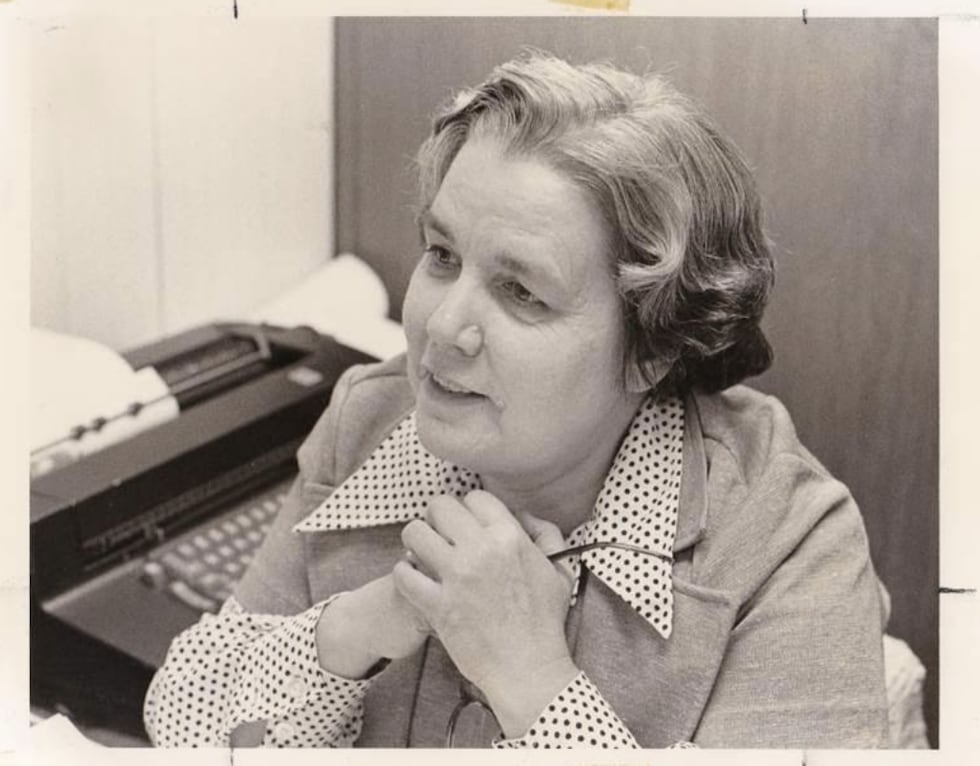
Through her seven years at the Adult Education Center, Geoffray said his mom came to love her work and the women she trained, many of whom landed jobs after graduation.
Geoffray said his mother would have been proud of the accomplishments of her former students.
“Many of them were her dearest friends. She communicated, kept in touch with them, but the main thing is that she really did not have blind faith in them. She really felt that these were talented women. Those women were the first African American secretaries in the Deep South. They integrated offices like Shell, Standard Oil, Pan-American Life and even city hall,” said Jeff Geoffray.
Raphael Morgan finished her training at the center in 1971. She went on to get a teaching degree from the University of New Orleans and became a teacher.
Her work career also included jobs at the Orleans Parish School Board and as an insurance adjuster.
“But no matter what, I think I’ll always be a teacher because you have the ability to change so many lives,” Morgan said.
Morgan is among the 431 women — mostly African American — who graduated from the Adult Education Center. The center closed in 1972.
Today, Jeff Geoffray and his sister, Jeanne, run the nonprofit group 431 Exchange. It is named in honor of the 431 graduates of the school and where it once stood in Exchange Place.
431 Exchange advocates for equal and affordable access to education. It also offers scholarships to adults who want to pursue higher learning. The story of the school, its members and the nonprofit’s work will be the focus of an upcoming PBS documentary.
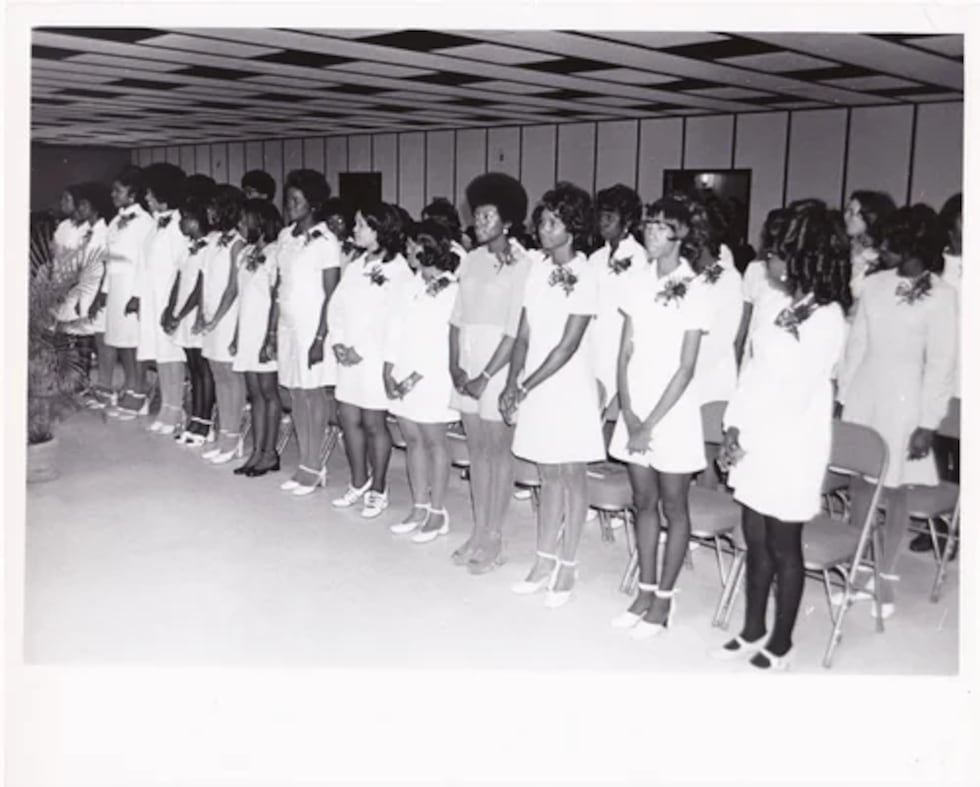
“Jeanne and her brother have done tremendous work to keep their mother’s dream alive. And we can’t wait until this [documentary] comes to a conclusion and the world will get to see what we experienced,” said Morgan.
The documentary is expected to be available in 2027.
To learn more about the 431 Exchange, visit 431exchange.org.
Copyright 2026 Gray Media Group, Inc. All rights reserved.