Never Forget: Advocates question pace of hiring for 9/11 survivor health program
Lawmakers say only 11 of 37 promised positions are filled or being actively hired
Nesconset, NY (InvestigateTV) — Tom Wilson, a former NYPD sergeant, was investigating a burglary in Brooklyn on the morning of Sept. 11, 2001, when the first plane hit the World Trade Center.
“I remember the radio all of a sudden a lot of chatter on it. And uh, I said to the elderly couple, ‘I’ll come back later. I’m gonna go shut down the Williamsburg bridge,’” Wilson said.
He raced to the bridge. The images of that day are still vivid. Wilson said he will never forget the faces of people crossing the bridge to escape lower Manhattan.
“And the look of horror on their face, people covered in dust,” Wilson said.
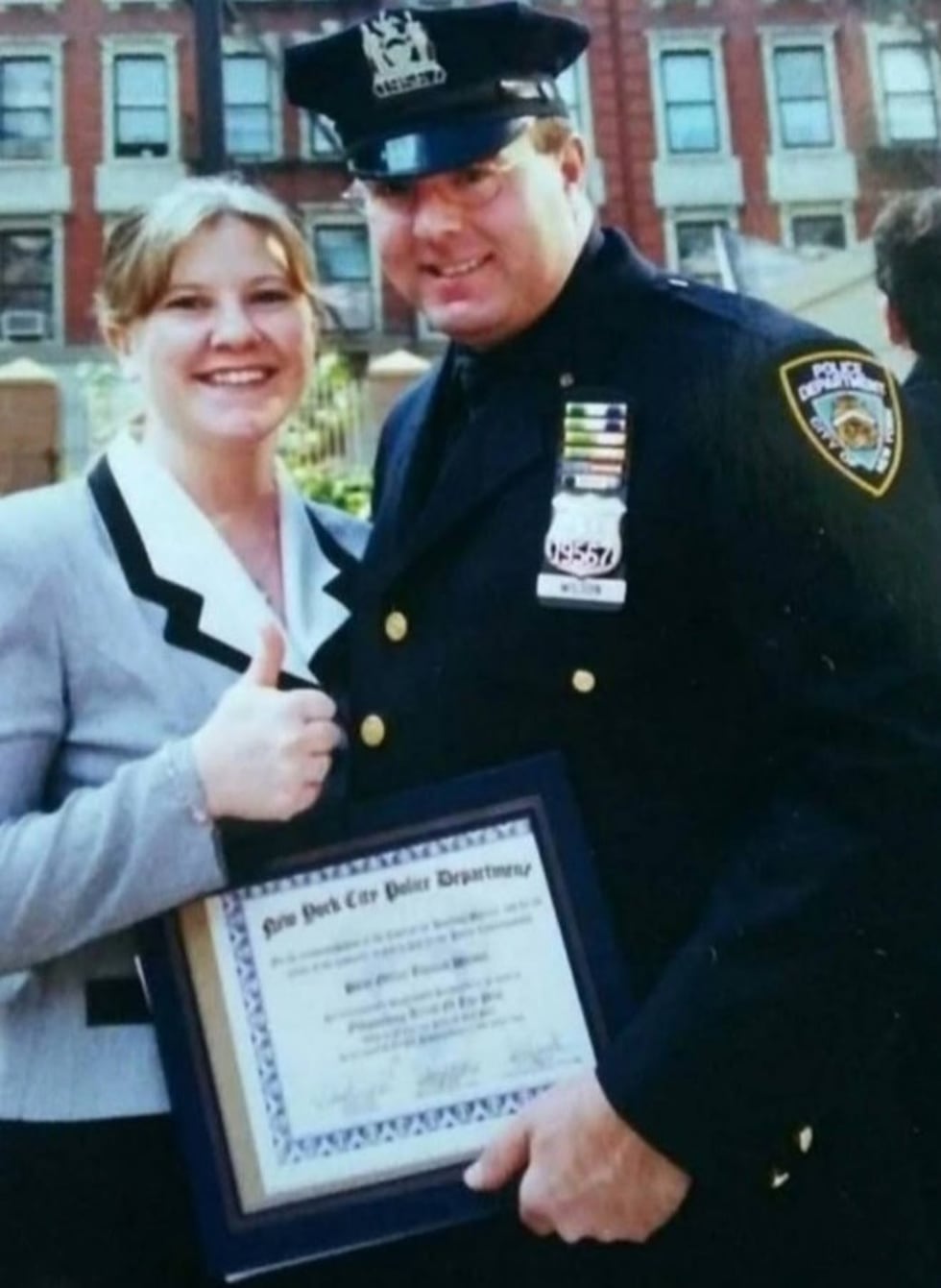
He later was assigned to Ground Zero and was sent to the Fresh Kills Landfill, where crews took most of the debris and heavy metal from the demolished buildings.
“And we thought we were going to be rescuing people left and right. But there was no one to rescue. It was just an apocalyptic scene,” Wilson said. “I never found anything, but my last tour at Fresh Kills Landfill was in April of 2002, just to let you know how long. And, I think the sifting went on to at least July of 2002. So, it shows you the scope of how long it went on for.”
Wilson said he remembers the sorrow, the dust and the smell.
“I remember it getting into my eyes and my throat, my tongue, and feeling that acidic, like that the smelliest chemical I can, I never even would imagine,” he said.
In 2008, Wilson was diagnosed with tongue cancer. At 39 years old, he had his tongue removed.
“So he used a graft for my wrist, that hole there, and he cut out the tumor by tongue, half my tongue,” he said.
Wilson’s tongue cancer is one of the illnesses that qualifies him for the World Trade Center Health Program, a federal program that has helped thousands of survivors and first responders with 9/11-related illnesses receive care.
Staffing cuts and delays
InvestigateTV first examined issues pertaining to the World Trade Center Health Program earlier this year, revealing how federal staffing cuts by the Department of Government Efficiency (DOGE) hollowed out the program’s staff.
Critics say DOGE’s cuts left a backlog of claims and forced 9/11 survivors to face delays in medical screenings and cancer treatments.
The Department of Health and Human Services informed lawmakers in April that the program has been approved to fully staff up to 120 total positions by rehiring 37 employees.
But, InvestigateTV found only four of those jobs posted online. Lawmakers confirmed that since May, only 11 of the 37 positions promised by the administration have been filled or are in the process of being hired.
Sen. Kirsten Gillibrand, a New York Democrat, wrote in a statement to InvestigateTV: “The Trump administration’s lack of urgency in filling the vacancies at the World Trade Center Health Program is completely unacceptable. I received assurances months ago that these hires would be made quickly, but HHS now appears to be slow walking the posting of dozens of jobs. Our brave 9/11 first responders and survivors deserve better. I am demanding that the administration stop stalling and fully staff the WTCHP so that our 9/11 heroes can get the timely care they deserve.”
HHS has not responded to InvestigateTV’s repeated requests for an on-camera interview about the job openings, the hiring process or the postings.
Advocates describe uncertainty
Benjamin Chevat is a major advocate for the 9/11 community, serving as executive director of two 9/11 community organizations: 9/11 Health Watch and the Citizens for Extension of the James Zadroga Act.
911 Health Watch Inc. was created, along with its advocacy sister organization, Citizens for the Extension of the James Zadroga Act, by the unions and groups that fought hard to get the Zadroga Act passed.
The James Zadroga Act established the World Trade Center (WTC) Health Program within the Department of Health and Human Services in order to provide medical monitoring and treatment benefits to eligible firefighters and related personnel, law enforcement officers, and rescue, recovery, and cleanup workers who responded to the September 11, 2001, terrorist attacks in New York City, at the Pentagon, and in Shanksville, Pennsylvania.
“You always kind of thought that this would be the year that this would be resolved. And it never quite gets resolved. Something else would happen,” Chevat said.
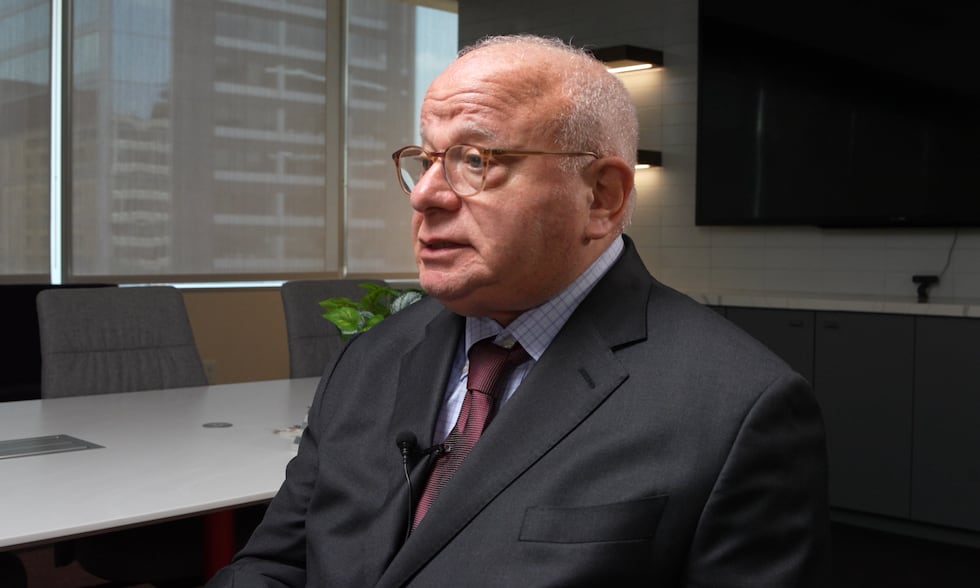
“It’s very difficult to really find out what’s happening because the administration, Secretary Kennedy, is not very transparent. But we believe there’s probably between 78 and 80 staff, at the program now. Which would be 13, 14 less than when they started and much less than the 120 that the program is authorized to have to deal with the influx of more than 30,000 new responders and survivors who joined the program about 10,000 a year in the last three or four years,” Chevat said.
John Feal is the founder of the FealGood Foundation, an organization designed to help and advocate for firefighers, police, nurses and volunteers within the United States who have been injured because of 9/11.
“People are sick and dying; 150,000 people are in the World Trade Center Health Program. Almost 50,000 of them right now have a certified 9/11-related cancer. That means, yes, the federal government said, ’9/11 caused your cancer.’ Just think about all of those who haven’t been certified yet,” Feal said.
To be certified or eligible for the program, people must complete an application as either a responder or a survivor. The program then evaluates the applications to determine whether they meet the eligibility requirements.
Once enrolled, the program sends a letter explaining how to schedule an initial health evaluation to determine if they have a WTC-related health condition.
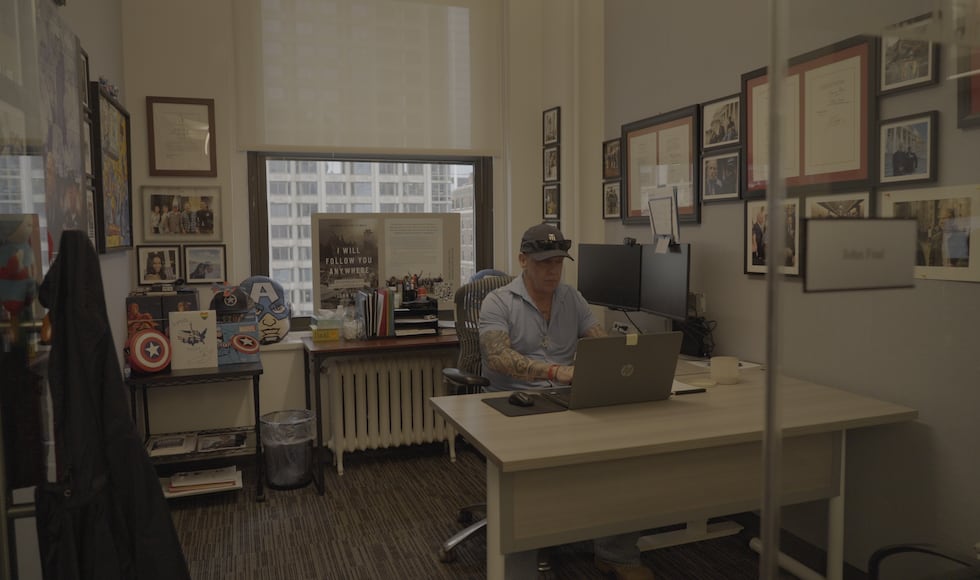
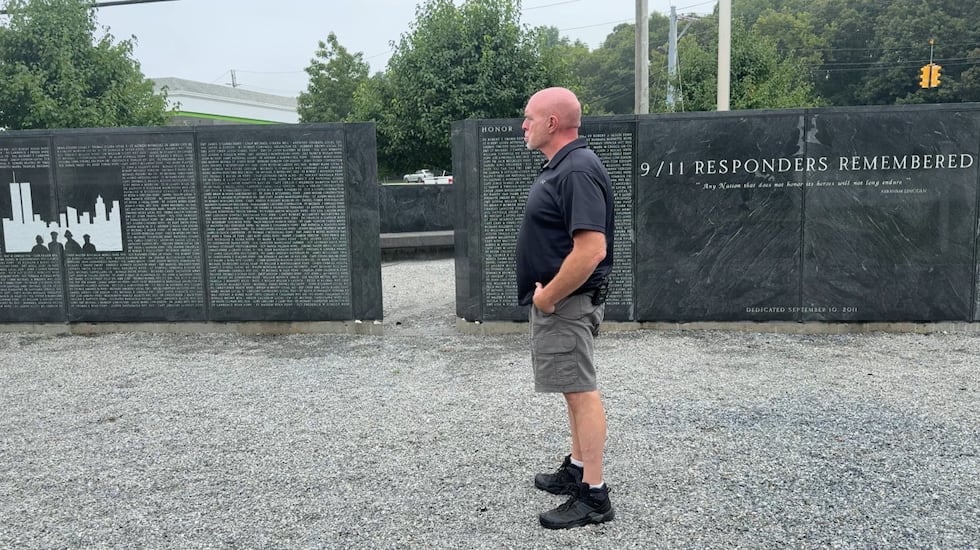
Feal, a retired construction worker, helped launch the 9/11 Responders Remembered Park. He was helping to clean debris at Ground Zero when about 8,000 pounds of steel crushed his foot. Hespent 11 weeks in the hospital with gangrene, leading to the amputation of half of his left foot.
“I pale in comparison to those who are deathly ill. Or who’ve passed away from a 9/11 related illness,” he said.
Feal said 345 new names will be added to the 9/11 Responders Memorial Park this year and said advocating for the care of first responders and survivors should not be a question.
“And a lot of them are going to come to Ground Zero on the anniversary of 9/11 and stand there on that solemn day, and they’re going to bulls*** their way through the day. And it’s disingenuous, and it’s an insult to those who lost a loved one. It’s an insult to those who lost a loved one on that day, and it’s an insult to those who are suffering,” Feal said.
Sgt. Wilson said he has not given up hope.
“The New York delegation will fight forcefully to make sure that the program is taken care of. That’ll continue,” Wilson said.
Wilson and Feal have both traveled to Washington, D.C., dozens of times advocating for care on behalf of the FealGood Foundation.
Public records on toxins released
Chevat and 9/11 Health Watch have also been fighting for 9/11 records from the city of New York for years and through numerous administrations.
On the same week of the 25th remembrance, their public records fight achieved a milestone.
On September 8, 2026, New York City Mayor Zohran Mamdani announced the release of more than 170,000 pages of city records documenting the government’s response to the attacks and their aftermath, as well as the settlement of two lawsuits brought by 9/11 Health Watch, ending a multi-year legal battle over records concerning air quality and health concerns.
“The very least our city owes the families, survivors and first responders whose lives were forever changed by the Sept. 11th attacks is transparency and accountability,” Mamdani said in announcing the public records portal. “For too long, New Yorkers have had to fight for access to records that should have been available to them in the first place. This portal is part of our administration’s enduring commitment to honor those we lost, care for those living with lasting health consequences and give thousands of New Yorkers the answer they’ve been asking for.”
For Chevat, and the 9/11 victims, he’s hoping that these records shed light on two basic questions: What did the city know about the dangers from the toxic cloud at Ground Zero and when did they know it?
Copyright 2026 Gray Media Group, Inc. All Rights Reserved.